Daesang Expands Gim Production and U.S. Distribution
Daesang global gim expansion includes production in Asia, retail distribution in the United States and new seaweed product formats.
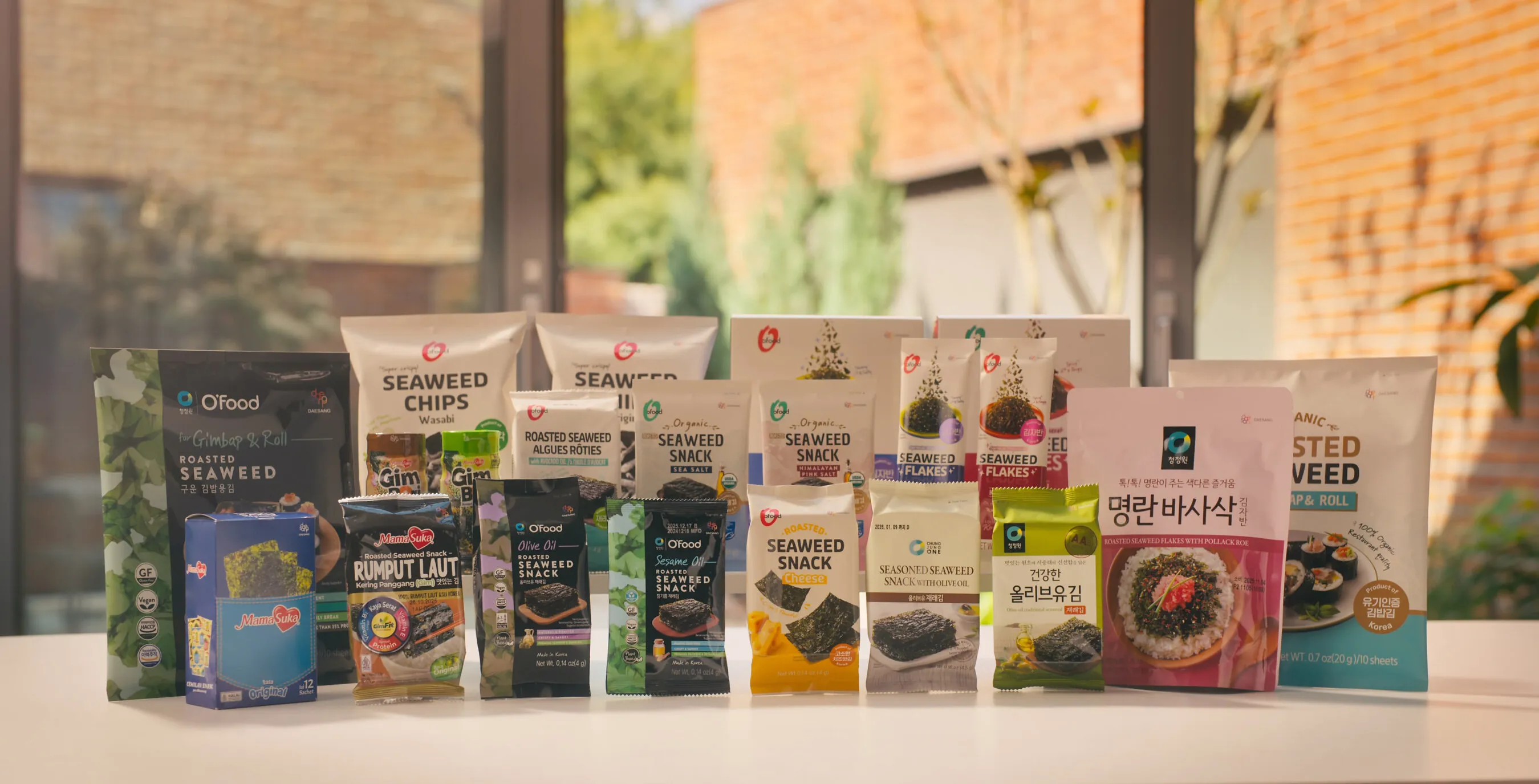
Daesang is expanding its global gim business through local production, product localization and new retail distribution. The South Korean food company exports gim to around 50 countries, including the United States, China, Vietnam and Indonesia. Sales of processed seaweed products, including export sales, reached KRW 200 billion in 2025, up approximately 30% year on year and more than three times their 2020 level. Its latest U.S. retail placement gives the company a route beyond established Asian food distribution channels.
Quality Control and Supply
Daesang established its Seaweed Research Center in Mokpo, South Jeolla Province, in 2017. The center supports quality analysis of raw gim, development of new varieties, aquaculture and manufacturing-process research, and new product development.
Its Gim Quality Grading System assesses dried gim against 13 criteria, including protein content, moisture, taste, texture and color, then classifies it into nine grades. The company selects raw gim for each product’s intended use and for the quality standards and consumer preferences of individual countries.
Daesang is also developing land-based aquaculture technology in response to instability in raw gim supply caused by climate change. In 2025, it was selected as a joint R&D organization in two areas of the Ministry of Oceans and Fisheries Project for the Development of Sustainable, High-Quality Gim Seed Production and Land-Based Aquaculture Technologies. By 2029, the company plans to develop a land-based aquaculture system capable of year-round mass production of gim and establish a foundation for commercialization.
Production in Key Markets
Local facilities in Indonesia and Vietnam give Daesang a combined annual gim production capacity of 1,500 metric tons. In Indonesia, the company ranks No. 1 in market share with seasoned gim, seaweed snacks and Gim Bori sold under the MamaSuka brand. In Vietnam, it continues to rank No. 1 in market share, primarily selling seasoned gim and gimjaban under its Ofood brand.
After establishing local production operations in China in 2026, Daesang is expanding distribution networks and localizing products for the market. Its China portfolio includes Korean-style seasoned gim and low-sodium gim for health-conscious consumers. Across Southeast Asia, it also offers seasoned gim in locally popular flavors including cheese and BBQ.
Retail Distribution and Formats
In October 2026, Daesang secured placement for Ofood Stick Gimjaban with Publix, a major U.S. retailer. In the United States, gim consumption is increasingly extending beyond snacking to meal pairing, with consumers more frequently using gimjaban and similar products as toppings for salads, noodles, fried rice, and other dishes.
In Oceania, Daesang secured placement for three varieties of Korean-made seasoned gim in major mainstream retail channels. At New Zealand retailer PAK’nSAVE, its gim products received the highest evaluation grade, securing placement across all stores.
The company plans to redesign Ofood gim packaging, develop products with a crunchier texture and offer more formats for convenience. Its planned lineup includes gimjaban, furikake and gimbukak, or crispy seaweed chips.
Building Global Gim Sales
Daesang is supporting its product expansion with marketing activities tailored to individual countries. It is conducting consumer engagement campaigns tied to local food culture in Indonesia and collaborating with local influencers in China.